Details: People have been using analog film with LEGO pieces to make pinhole cameras for years, but this is the first one I've seen that is controlled by a microprocessor. The description offered falls just short of full instructions - the complete source code (which includes such features as a film winding angle calculator and shutter speed calculator) is available to view or download. Since it tracks how much film is left, you never have to worry about exposing the rest of the film before you want to.
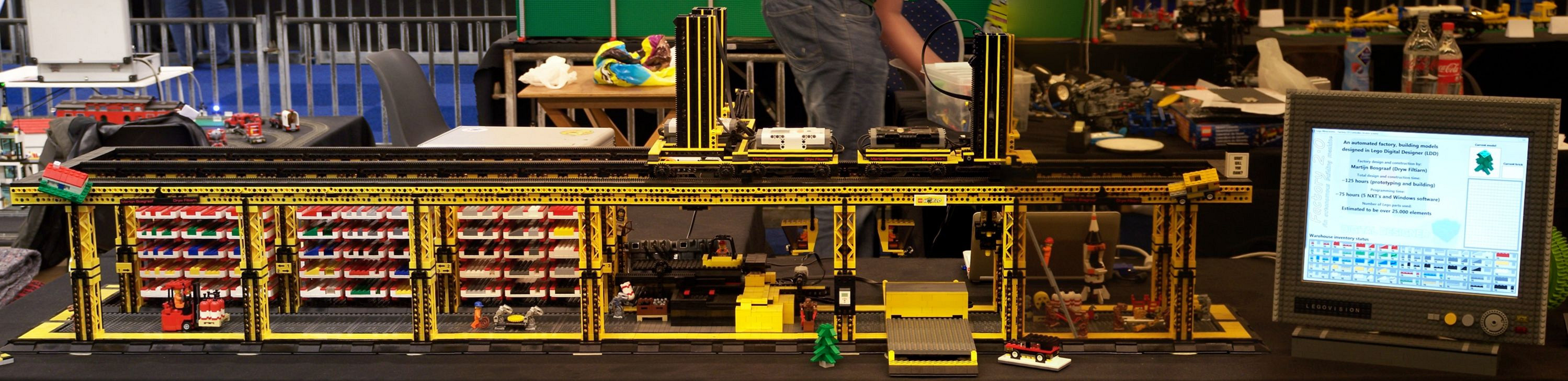
Details: It seems like just a few weeks ago that we were talking about an NXT robot that could print LDRAW designs. We've also seen an NXT-based warehouse for gathering parts, based on the LEGO company's own warehouse. Now, we see a bizarre combination of the two - a 5-NXT factory (staffed with minifigures to "drive" the various motorized parts) that gets parts out of a warehouse and then builds with them using designs generated from LEGO Digital Designer files. The choice of LDD instead of LDraw (like in the previous model-building 'bot) does limit things in a way, but any loss there is made up for by the ability to handle a large and easily changed set of parts. The warehouse contains 95 different types of bricks - over 1500 pieces total to build with. Most impressively, this entire thing was built and programmed in less than 5 months - it was only started in June of 2010. To see some work-in-progress and behind-the-scenes footage, look at the builder's other YouTube uploads.
Here's what the whole LEGOWORLD set-up of this factory looked like (click to "enbiggen"):
Details: Generally, when you see minifigs in an animated context, stop motion animation is used. This time, an NXT was used instead, controlling both NXT motors and Power Functions motors. There are more details (along with the actual video) on the website listed above - don't miss the photos, they're the only hints as to how this was done.
Details: It seems like it's been far too long since I've seen a great new RCX-based model (sure the NXT programmable brick is cool too, but the RCX never stopped being awesome). Here's a new one that combines video-game graphics with RCX-based motion and music. The imagery is spot-on Donkey Kong, and the rolling barrels / jumping Mario synchronization is absolutely charming. Of course, this is already starting to go "viral" (appear seemingly everywhere online), but it takes a LEGO fan to catch some of the little details that make models like this one exciting. Take a closer look at the Donkey Kong character, and you may recognize it as one of the trolls LEGO makes for the current "fantasy"-based castle line. People tend to think of Technic as one thing and ridiculous fantasy figures as another, but the LEGO company is surprisingly good at designing parts that can be used in a variety of ways.
My only gripe is that there aren't more photos - we need to know how good that custom Mario fig looks. I'd also be interested in seeing close-up shots of the jumping mechanism and the barrel-launching mechanism. It's kind of surprising that there isn't a great repository of Mindstorms music programs out there too (it takes a ridiculous amount of time to get a tune just right - you'd think people wouldn't want to see the efforts duplicated). Anyway - as much as I'd like to see more documentation of this (and the builder's other great models, which you can find in http://wrench.vib.org/lego/ if you don't mind poking around a bit), this is still an awesome model.
Details: Kids, don't try this at home! This project was started as a way to motorize a crank-powered cord-making machine, but TheDude decided to build a full LEGO® MINDSTORMS NXT robot around it to fully automate the process. Although there isn't a picture of just what was done to make a beam fit into the place that the crank came out of (the website says something about "fil[ing] a lego sleeve", which qualifies as dangerous cheating if you ask me), there are plenty of other photos at the link above. There's also some documentation of the challenges involved (such as the rotating output of the original machine that the robot was built around).


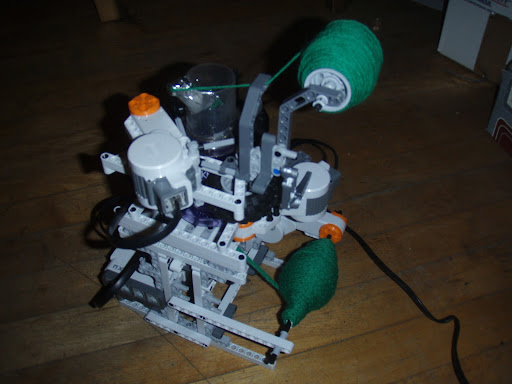
 robot around it to fully automate the process. Although there isn't a picture of just what was done to make a beam fit into the place that the crank came out of (the website says something about "fil[ing] a lego sleeve", which qualifies as dangerous cheating if you ask me), there are plenty of other photos at the link above. There's also some documentation of the challenges involved (such as the rotating output of the original machine that the robot was built around).
